
Portal axles: more clearance without lifting the body
Understand the system in two minutes. Every question answered here.
+11 cmExtra clearance under the differential
What is a portal axle?
A small gearbox fitted at each wheel, between the end of the axle and the wheel.
The axle enters the box at the top and the wheel turns at the bottom. So the axle and differential sit above the wheel centre, and the lowest point under the vehicle rises on the same tyres.
How it works
1.35:1Reduction ratio: 27 / 20
- Input gear, 20 teeth: takes the drive from the axle shaft.
- Idler, 16 teeth: passes the drive on and keeps the wheel turning the right way.
- Output gear, 27 teeth: larger, so it turns the wheel slower with more torque.
- Engine
- Gearbox
- Transfer case
- Driveshaft
- Differential
- Axle shaft
- Portal box
- Wheel
Benefits
More ground clearance without lifting the body
The axle and differential rise above the wheel centre.
A lower centre of gravity than a suspension lift with the same clearance
You gain clearance without raising the whole body.
More torque at the wheel to turn big tyres with ease
A 1.35 ratio means about 35% more torque at the wheel.
Less load on the differential and shafts
The reduction happens at the wheel, so the differential and shafts carry less torque.
Will it fit my vehicle?
It depends on the axle type of your vehicle.
| Axle type | Examples |
|---|---|
| Solid axle front and rearEasiest | Patrol Y61, Land Cruiser 70, Grenadier, classic G-Class |
| Independent front + solid rearThe rear is easier; the front needs a dedicated solution | Hilux, Prado, Land Cruiser 300, Ranger, Bronco, new G-Class |
| Fully independentThe hardest | Patrol Y62 |
Honest considerations
- Extra weight at the wheelsA complete gearbox sits at each wheel.
- Portal oil that needs regular serviceEach box has its own oil, which needs regular checks and changes.
- A small loss in efficiencyThe gears take a small share of the power, and fuel use usually rises slightly.
- Higher cost than a suspension liftA complete gear system at each wheel, not just suspension parts.
The show truck
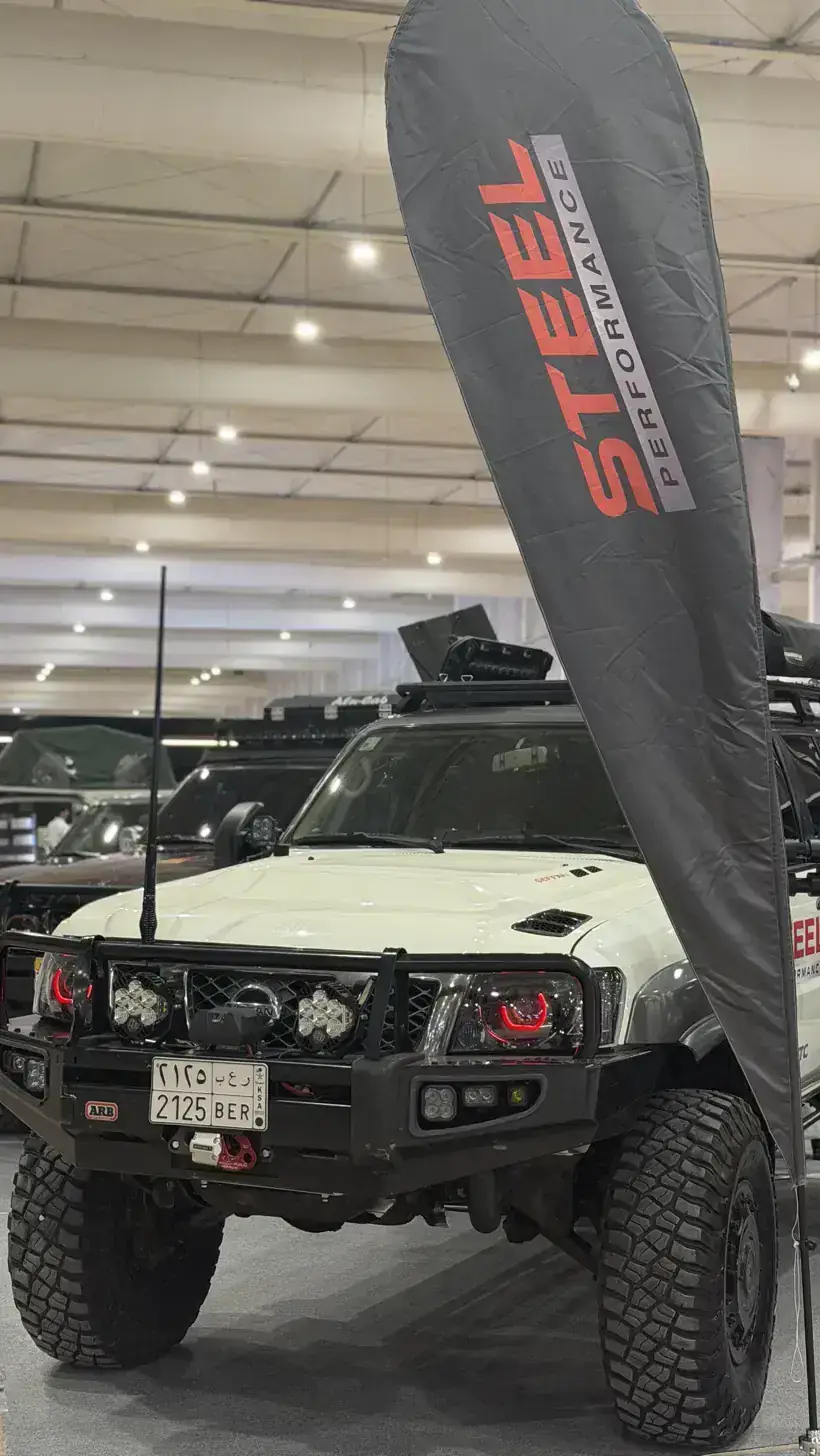
Nissan Patrol Y61 Super Safari 2021
- Engine
- TB48 Turbo (Garrett G35)
- Gearbox
- BMW ZF 8HP70
- Portals
- Portal axles 1.35:1
- Tyres
- BFG 37"
- Tyre inflation
- CTIS
- Suspension
- Icon 2.5
Portal system: 

Built by @fahad.detour
Photos and video
-
At the booth
-
Next to a Sequoia
-
During the build
-
37" tyres
Questions
What is a portal axle?
A small gearbox fitted at each wheel, between the end of the axle and the wheel. It lifts the axle and differential above the wheel centre, so you gain ground clearance without lifting the body.
How does it add clearance without lifting the body?
The top gear takes the drive from the axle and the bottom gear turns the wheel. Because the bottom gear sits lower, the axle and differential end up above the wheel centre, which raises the lowest point under the vehicle.
How is it different from a suspension lift?
A suspension lift raises the whole body, so the centre of gravity rises. Portals raise the axle and differential, so you gain clearance with a lower centre of gravity than a lift that gives the same clearance.
What does the reduction ratio mean?
The gears make the wheel turn slower than the axle, with more torque. A ratio of 1.35, for example, means about 35% more torque at the wheel, which makes large tyres easier to turn.
Does it add power?
It does not add engine power, but it multiplies torque at the wheel. And because the reduction happens at the wheel, the differential and shafts carry less load.
Does it affect speed and fuel use?
The reduction raises engine rpm at the same road speed; the bigger tyres usually fitted alongside offset part of that. Fuel use usually rises slightly.
What do "solid axle" and "independent suspension" mean?
A solid axle is one rigid housing with the shafts hidden inside. Independent suspension has exposed shafts with joints and boots, and each wheel moves on its own.
Why is it easier to fit on some vehicles?
On a solid axle the axle end is fixed, so the portal bolts onto it. Independent suspension has no fixed axle end, so it needs a different solution. The front is more complex than the rear because it includes the steering.
How many gears are inside a portal?
Usually three: a top gear that takes the drive, an idler, and a bottom gear that turns the wheel. The idler keeps the wheel turning in the right direction. Some systems use four gears for a bigger drop.
Does it need maintenance?
Yes. Each portal box has its own oil that needs regular checks and changes.
Does it affect brakes and steering?
Portals change the hub position, so the brakes may need adapting depending on the kit. At the front they include part of the steering, which is aligned after fitting.
Do I need bigger tyres?
Usually yes, to make the most of the extra torque and keep the proportions right. We choose the size for your vehicle.
Can I fit the rear only?
Technically yes, but the vehicle then sits higher at the rear and its balance and stance suffer. Most customers fit front and rear together.